Travel Notebook: Shanghai Streets - A Midmorning Walk
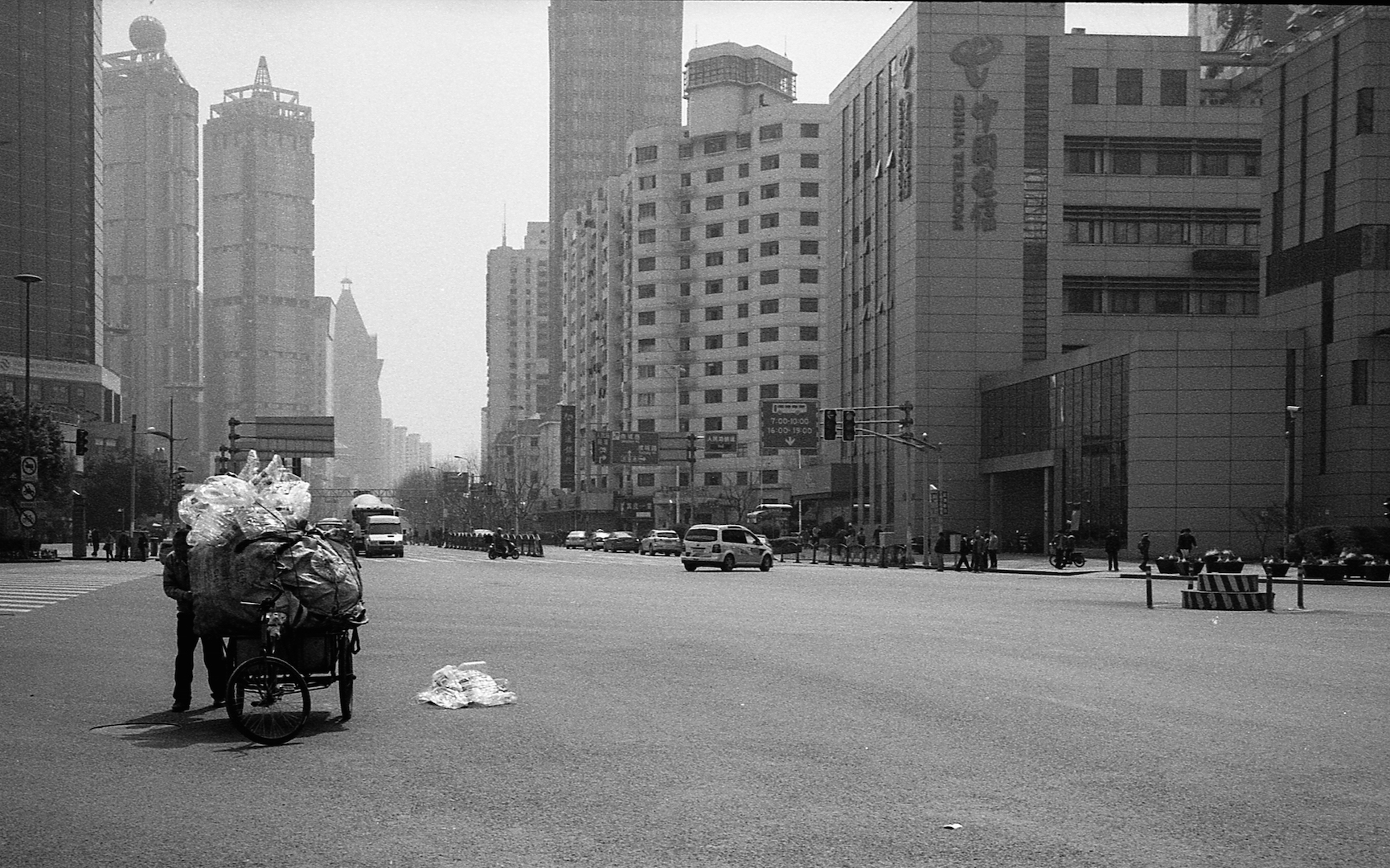
Few cities in Asia have seen the expansive and rapid growth and development Shanghai has experienced. Sporting over 24 million people, modern day Shanghai is a global epicenter of business, finance and commerce. Anyone who has ever been fortunate enough to visit the city has experienced, what is undoubtedly one of the most stunning, colorful and visually stimulating skylines in the world. However, back as early as 1987, photos of the city and its surrounding area show a flat, green port location that was essentially untouched for decades.
A search on the history of Shanghai reveals that it's location was a desirable European port destination. This helped to transform the city into one of the most important cities in Asia facilitating commerce and trade between east and west by the 1930's. The Bund area of Shanghai, a popular tourist destination harkens back to these earlier times when European influences took root in the city and helped to shape its architectural identity. My interest was to explore the streets of Shanghai and shoot with my Leica M6 and a single roll of Tri-X 400 for a few hours on a Saturday morning.
When staying in the main downtown area of Pudong, it is easy to get seduced by the impressive skyscrapers like the Shanghai World Financial Center, Shanghai Tower, shopping areas and even an underground Apple store. If one is adventurous enough, a short walking distance away from the main downtown area is far more interesting and visually appealing version of the city where locals are genuinely welcoming and curious to engage with you, camera and all. As I made my way in and around the neighborhoods of the Pudong district, it was easy to get a sense of how far I had wandered by just looking for the Shanghai Tower in the background. The city was busy with activity and engaged in the daily rituals and routines you might find in any major Asian city. Vendors selling papers, small food shops preparing mid-day meals and plastic and cardboard recyclers moving their cargo across the city. As visitor and traveling alone, I felt comfortable and found walking around the streets and areas surrounding the Pudong district as easy as navigating San Francisco or Chicago. It was an added bonus to find myself wandering into one of the major plaza and outdoor park areas where many locals enjoyed strolling with their children, practicing Tai Chi and a few practicing the ancient art of Chinese calligraphy.
During my last trip to China I was fortunate enough to have dinner with some artist colleagues of Jim Woodside, the head of our Visual Art program. After a dinner of authentic Chinese hot pot, we wandered back to their studio and we found a few moments to try our hand at Chinese ink calligraphy. What I learned is that the traditional art of Chinese calligraphy is both an external and internal practice. Those who practice the art see it as a means of communicating outwardly as well as reflecting the artist's internal aesthetic sensibilities. Traditionally, four key tools are needed: writing brush, ink stick, paper, and ink slab. Water calligraphy is apparently a popular pastime as well as morning meditation. You can easily spend 15 or 20 minutes watching the characters emerge onto the warm, sun soaked stones and slowly, peacefully begin to dissipate into the ground canvas from which they emerged. This particular Saturday morning I was lucky enough to have an opportunity to try my hand at water calligraphy and as the kind woman handed me her brush, our communication became centered on her role as teacher and mine as student. She smiled and encouraged with a kind word or two indicating I had done well for a novice.
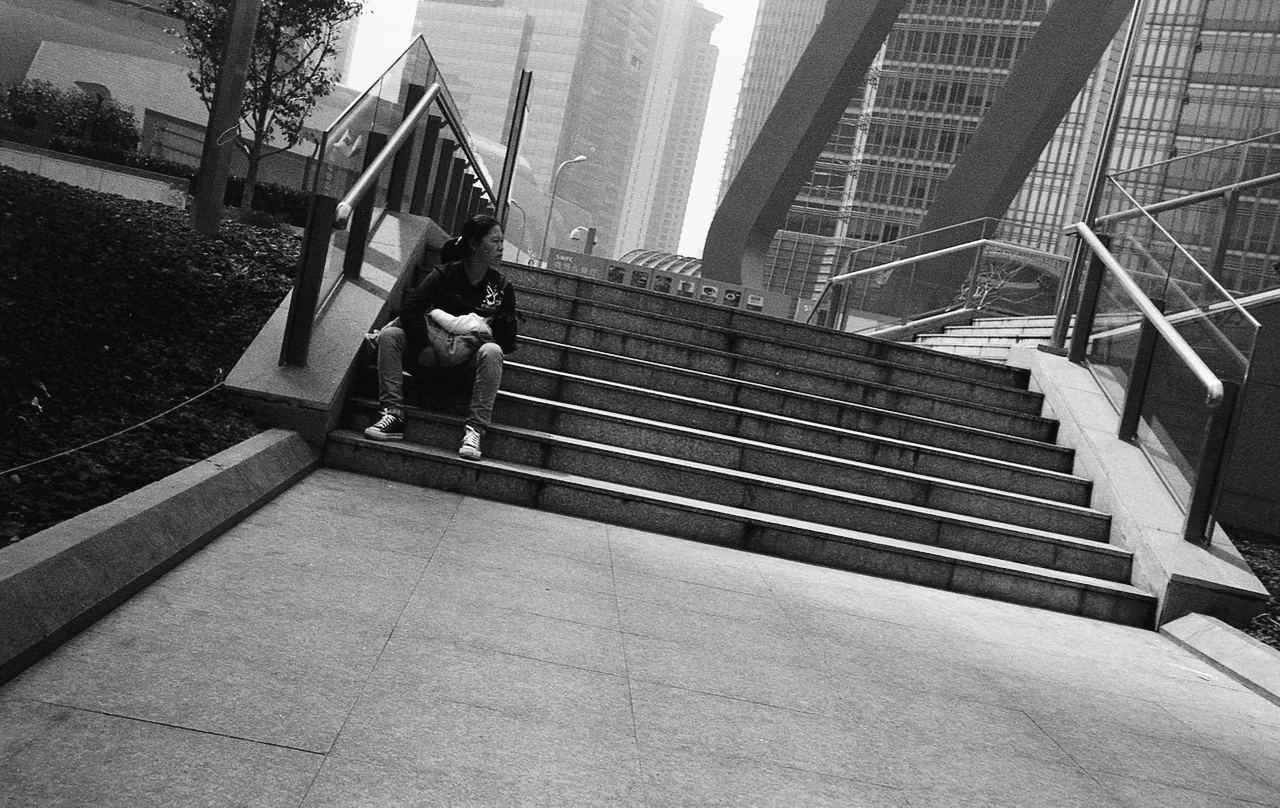
I have really enjoyed shooting film again and over the past two years I have found carrying my M6 and a roll or two of film and heading out for unchartered neighborhoods a way of incorporating contemplative practice with taking photographs. Shanghai is without question, a city that can easily produce hundreds, if not thousands of digital images. There is something to shoot on every corner and in every direction. It was refreshing to walk around the city with nothing more than my camera, a bottle of water and some sunglasses. I encountered a wonderful balance between experiencing the sights and sounds of the city and its people as well as an opportunity to fully emerge myself into the culture and vibe that makes Shanghai so incredibly amazing. In just a few short hours one can experience a young shopkeeper putting the fresh morning catch out in a plastic basket on the stoop of a busy street to children chasing a small turtle in a park garden while their parents watched and two small dogs bantered around unleashed. I feel incredibly fortunate to have visited Shanghai several times and each time I feel like I get to take a small piece of the city back with me. The richness of history, architecture and culture leave you wanting more. Its past feels at times in conflict with its future. Without question, Shanghai needs to make your bucket list, not only as a photographer but as a citizen of the world.