Looking Back, Forging Ahead
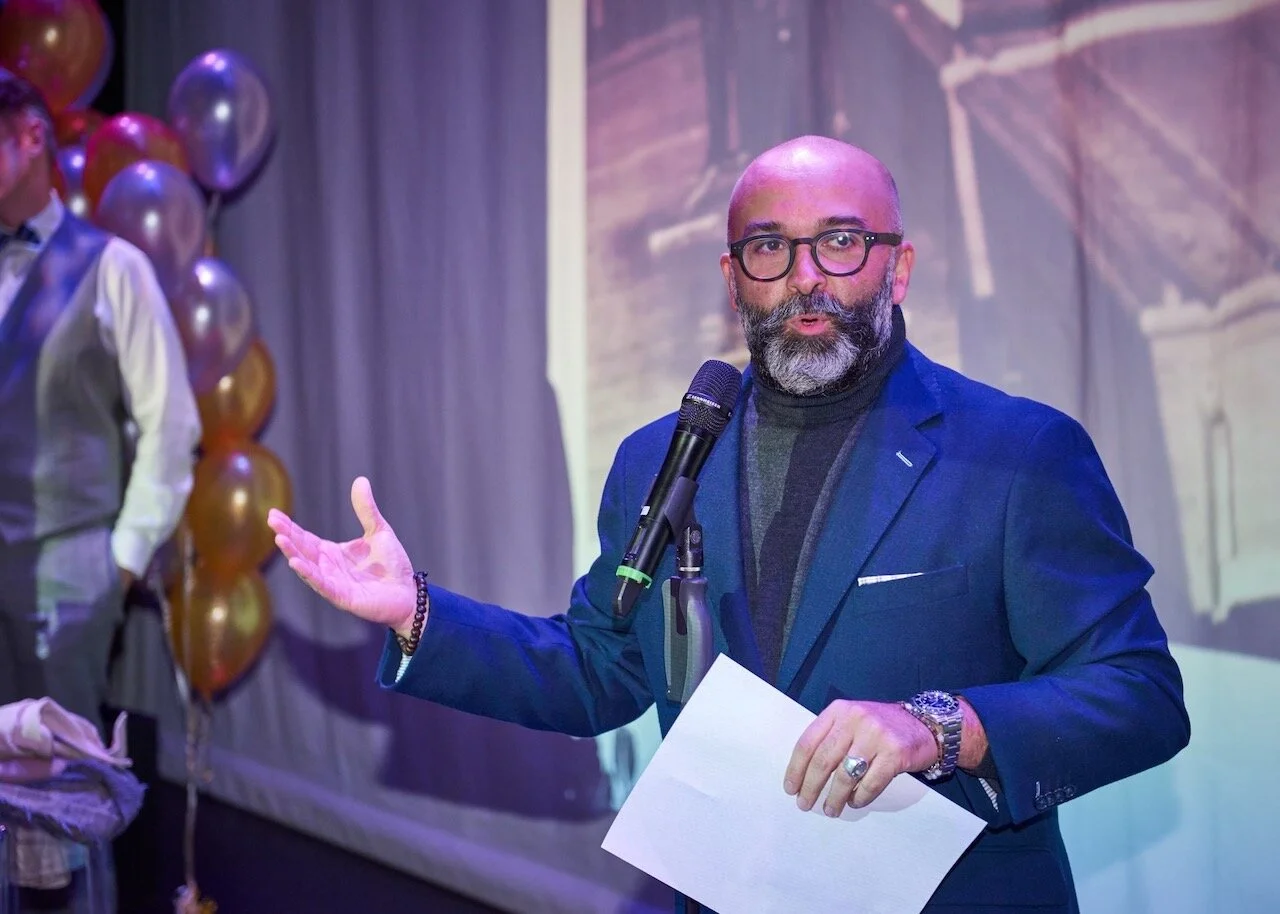
Behind Stowe, 2018-2019
When I arrived at Walnut Hill in July of 2010, it was clear to me that the School had very much benefited from the strong, visionary, and trailblazing spirit of those who had led the institution before me. However, I had arrived after a small span of turmoil as the fourth Head of School in four years. The students who would become Walnut Hill’s graduating class of 2011 had managed to succeed against the backdrop of the 2008 economic collapse and significant leadership transitions for the School. What I quickly realized was that much of our work as a School would require a steady and long-term approach.
In the 10 years since those first few months on campus, I can now look back and reflect on the growth and change we have made as a school. Our programs have continued to evolve, at times proactively and at other times in response to the shifting expectations and external forces. Some of our most recent alumni have been instrumental in pushing Walnut Hill to fully engage in the work of diversity and inclusion. Our jazz students have brought with them a keen sense of improvisational spirit and creative energy. The birth of our film and media arts program has arrived at the moment when film, video, and media are central to the outreach of any artist or culture creator.
Enrollment has been steady and healthy, attrition is at record lows, and we have increased percentage and depth of alumni engagement, especially during this recently completed year of our 125th Anniversary celebrations. The past decade has been, on the whole, a successful one. Physically, we have added several new buildings to the campus, updated our entire kitchen and dining facility, and invested considerable resources to the upkeep and preservation of our historic Natick campus. Just as importantly, we have modernized our student support efforts and established solid community programs. The understanding that students at Walnut Hill are here to receive both arts and academic training is now connected to our belief that we are also here to provide life training. In retrospect, Walnut Hill has managed to adapt and change for the better for well over a century. And now, I find that Walnut Hill must once again embrace change. But why?
As we approach the first full 20 years of this century, we are again educating young people
against a turbulent backdrop. The waves of dissension, discord, and doubt are crashing against a traditional independent school model that could be on the verge of collapse. Indeed, in our own backyard, small colleges and schools across New England have announced their closure, and others have successfully completed mergers with larger institutions. (In fact, in 1970 Walnut Hill engaged in conversations about the potential merger with Noble and Greenough School in Dedham, as well as Rivers School in Weston.) Fortunately, the universe (along with my predecessors on the Board of Trustees and the administration) has seen fit to give Walnut Hill a modern and competitive advantage. Our unique and specialized mission, now rooted in the arts, affords us the opportunity to champion the single most important human trait needed in the 21st century: creativity.
Now, let me paint for you a picture of two schools: one that is slow to change, unable to adapt to outside pressures, and comfortable with the status quo; the other that blossoms from its maverick roots and goes forth into the future with a bold vision, with the ability to adapt to change, and with the desire to engage in a new future. The truth is, Walnut Hill is on the edge of a crucial decision: Should we choose to be the former fictional school, or the latter forward-thinking one? Schools like ours are facing increasing pressure to address not only an outdated financial model, but an educational model that has gone largely unchanged for several decades. The new “sharing economy” has disrupted every industry from taxis to hotels, and this disruption has its sights set squarely on education as one of the few industries remaining fundamentally unchanged.
Disruption is also hitting the art world. In 2016, the National Endowment for the Arts completed its work on a publication called Creativity Connects: Trends and Conditions Affecting U.S. Artists. The report outlined four key trends that are directly impacting artists in the 21st century. They include these tenets: technology is profoundly altering the context and economics of artists’ work; artists share difficult economic conditions with other segments of the workforce; structural inequities in the artists’ ecosystem mirror those in society more broadly; and, lastly, training and funding systems are not keeping pace with artists’ evolving needs.
The world is requiring that we evolve to address the pressing challenges of this century, and, in my opinion, artists are the world’s greatest hope. Walnut Hill has been successfully training artists since the mid-1970s. The challenge and opportunity ahead of us, though, is this: to continue to tap into our trailblazing spirit and maverick DNA and once again embrace the evolutionary process of change, while welcoming the new reality of an interconnected, digital society that is increasingly global and continually breaking many long-standing social norms.
So, where does that leave us? Many have asked me how I think Walnut Hill will change in the future, and my answer actually dates back to 1893 and our motto Non Nobis Solum. We must continue to exemplify the concept that Walnut Hill exists not for ourselves alone, that the artists and creative thinkers we graduate serve as a catalyst to help create a better world. We must expand the opportunities of engagement to artists as young as 5 (and as old as 80!), and we should push forward a worthy initiative to share art with communities as close as Natick and as far away as Seoul.
I believe the financial model for independent schools is in need of significant redesign. This will require us to explore options to generate alternative revenue, as well as expand our online footprint to extend far beyond 12 Highland Street, while at the same time making a commitment to becoming an integral partner to the town of Natick and the surrounding communities. Walnut Hill has been—and continues to be—an important arts provider to the Greater MetroWest area, and our ability to increase this role will help us live our motto, “Not for Ourselves Alone.”
The building blocks of Walnut Hill’s DNA are bold thinking and innovative leadership. This was true at the turn of the 19th century, and again in the 1970s and 1980s when we adopted our current arts mission. The time has come for us to once more redefine what it means to be an arts school and, equally important, an arts provider and key resource to the community writ large.
Which brings me back to creativity. There has been so much talk recently about the power
of creativity and how important it is as a skill of the 21st century. Stanford University professor David Eagleman and composer and Rice University professor Anthony Brandt do an excellent job of articulating the elements that can foster and enhance our creative process and creative thinking in their recent work The Runaway Species: How Human Creativity Remakes the World. One of the most critical ways we can train young artists to flex their creative muscle is to give them opportunities to try things out and experiment with mediums and methods with which they are not familiar. This exercise of pushing a young artist to explore an area that is outside their major field of study develops the kind of bending, blending and breaking of mental processes that Eagleman and Brandt discuss.
One way Walnut Hill is beginning to implement this type of thinking into our curriculum is with a new offering we call ART360. The program enables students in all majors to explore a subject outside of their primary major per semester. Next year, mini classes in photography, hip-hop, acting, guitar, podcasting, fashion design, and ballet will be offered. We know that our Walnuts
have an insatiable appetite to explore a variety of mediums and disciplines. Our hope is
that through this structured and complementary program, students’ creative capabilities as a whole will be enhanced.
Ultimately, the path ahead of us in the next 125 years will demand that we experience and pursue the many exciting opportunities for collaboration and creativity both that we seek out and that seek us out. Our future work includes exploring new artistic partnerships, redesigning how we use our time across the campus, and creating a new schedule that will encourage and facilitate creative and collaborative work. Happily, thanks to those who came before us, we are already rooted in one of the most important and sought-after fields: the arts. Now, we can evolve into an organization that maximizes the advantages that the 21st century provides. I, for one, am looking forward to this journey, as I know it is filled with infinite possibilities and unlimited potential.