My Kombucha Story
Kombucha. Some people love it, some people hate it. In the past several years, it has grown to a multi billion dollar industry. Everyone seems to have jumped on the kombucha bandwagon and as someone who has enjoyed the tasty beverage, I can tell you that buying it from your favorite neighborhood store isn’t inexpensive. Which is why, back in December, when my mother in law was kind enough to gift me a scoby from her brewing adventures, I decided it was time to start brewing on my own.
Before we begin with my personal brewing journey, it’s important to note that historians believe that the fermented tea’s origin stories may date back thousands of years to the Qin Dynasty (221 BCE) in China. It is believed that the Emperor Qin Shi Huangdi was the first to make and drink the beverage, and since we know that both fermentation and tea were popular in China, it seems reasonable to believe that the origin story starts there. The most important element of kombucha is its “SCOBY”—a symbiotic colony of bacteria and yeast. The living disc is similar to a mushroom and is often called the “mother.” The magical union of yeast and bacteria results in a highly acidic, slightly carbonated, tart and delicious drink.
My scoby sat in a dark top shelf of our pantry and it wasn’t until my mother in law asked me via FaceTime if I had been tending to it properly. She was concerned that if I neglected it too long, it wouldn’t survive. Luckily, I had been watching it but I was, all truth be told, not motivated to begin the process of learning and mastering the art of brewing. Note, this scoby is the grandchild of the original mother from my cousin Joe Garcia who is a formidable amateur chef and apothecarist.
Enter COVID-19 and the statewide shelter in place ordered by Governor Baker for all residents of the Commonwealth of Massachusetts. With nowhere to go and ample time on my hands, I began the process of reading, watching and absorbing all things kombucha. It was also, in all honesty, out of necessity. The continued cost of refilling my growler at the market every week at about $14 per fill became impossible with the inability to easily get the product safely delivered to our house. So let the adventures begin.
My first batch was, as to be expected, lackluster. It looked and tasted like kombucha but lacked the proper carbonation of a second fermentation and quite honestly, I started with the idea that I could mix all sorts of interesting flavors and combinations. First mistake. However, with some patience, a willingness to read and watch videos I became more aware that to become a master kombucha brewer one needs to commune with the beverage. You must see yourself as one with the scoby and tea and therefore, the first time my scoby gave birth to a new baby scoby, I felt like a proud mom who had just seen her baby enter into the great, big world.
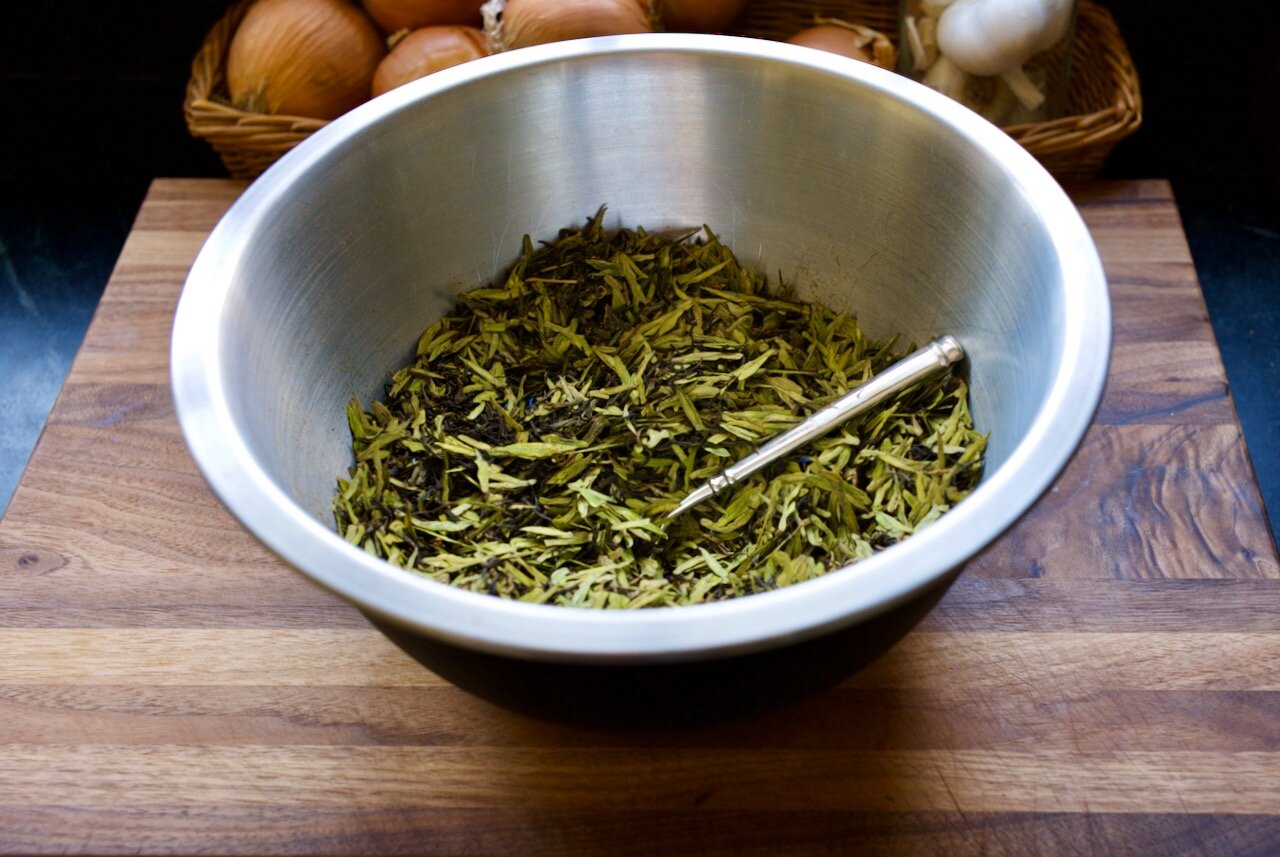
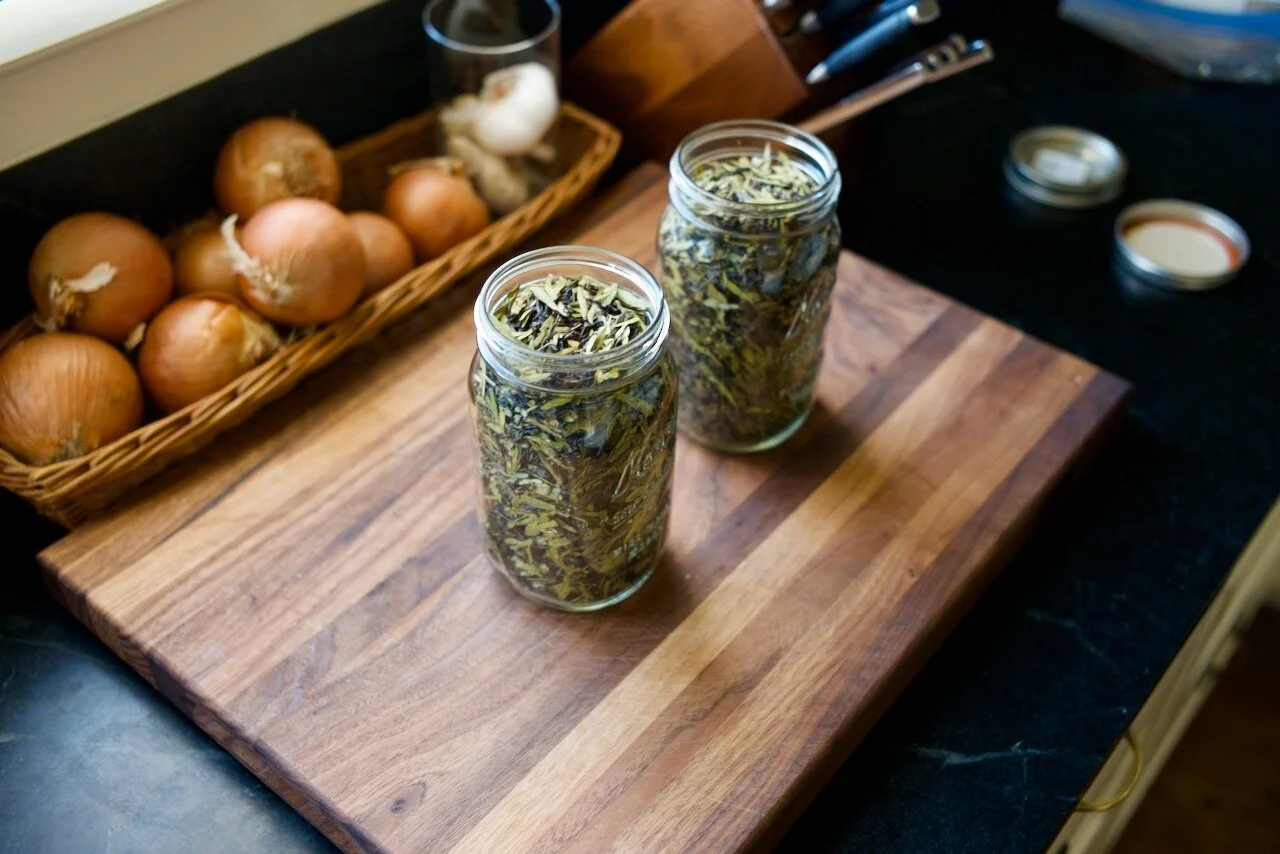
I used whatever large glass containers I had access to in the house. Properly cleaned and sterilized them. Most modern dishwashers have a sterilize option so that made prepping the glassware easy. I had also been given several gifts of premium chinese teas from our international families at Walnut Hill. This gave me an advantage in terms of important ingredients. I was able to use high quality loose teas that I combined together to come up with a 50/50 green/black tea mix. Some kombucha brewers will tell you that the prefer all black tea, or all green tea. I have found that the combination creates a nice balance of flavor profiles and a gorgeous honey amber color. The flavor is also complex but at the same time subtle, making it perfect for adding additional flavors as part of your second brew.
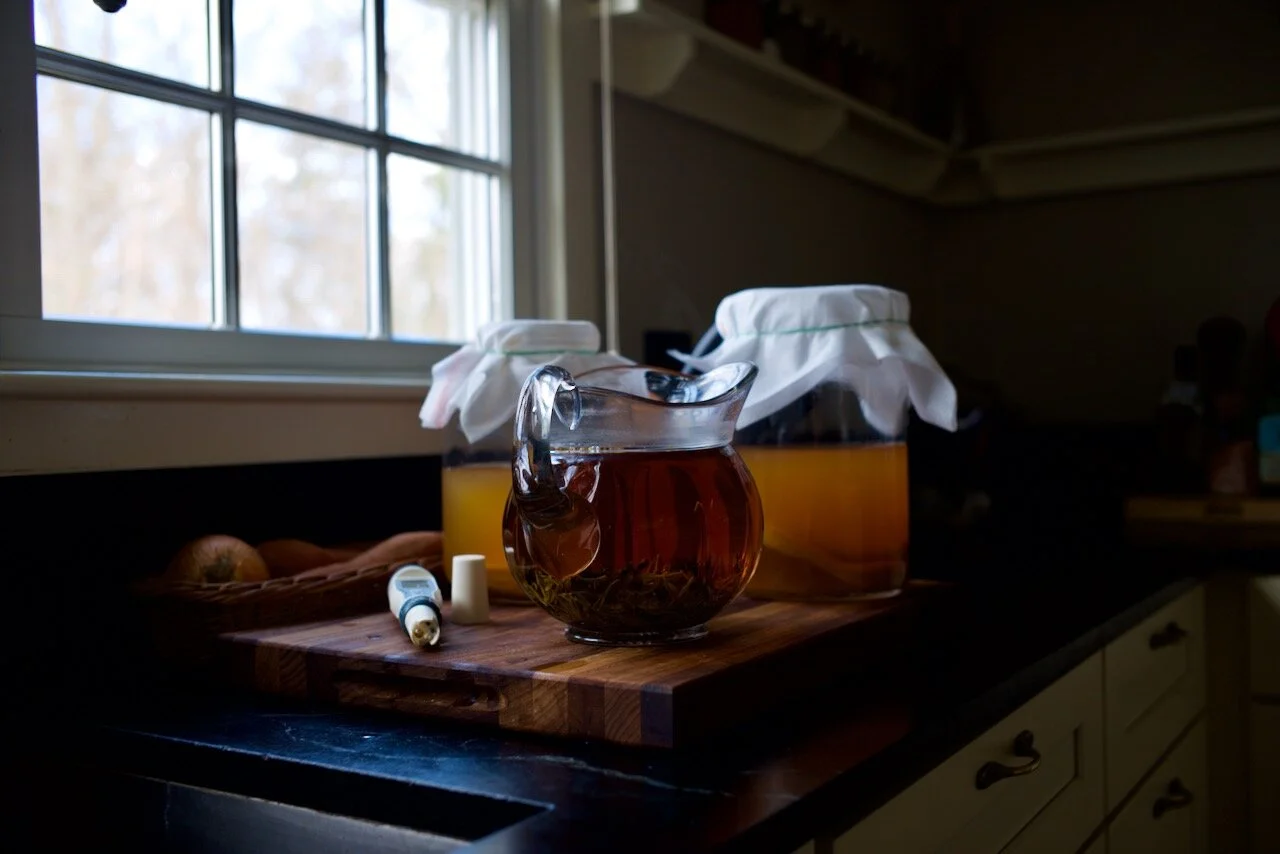
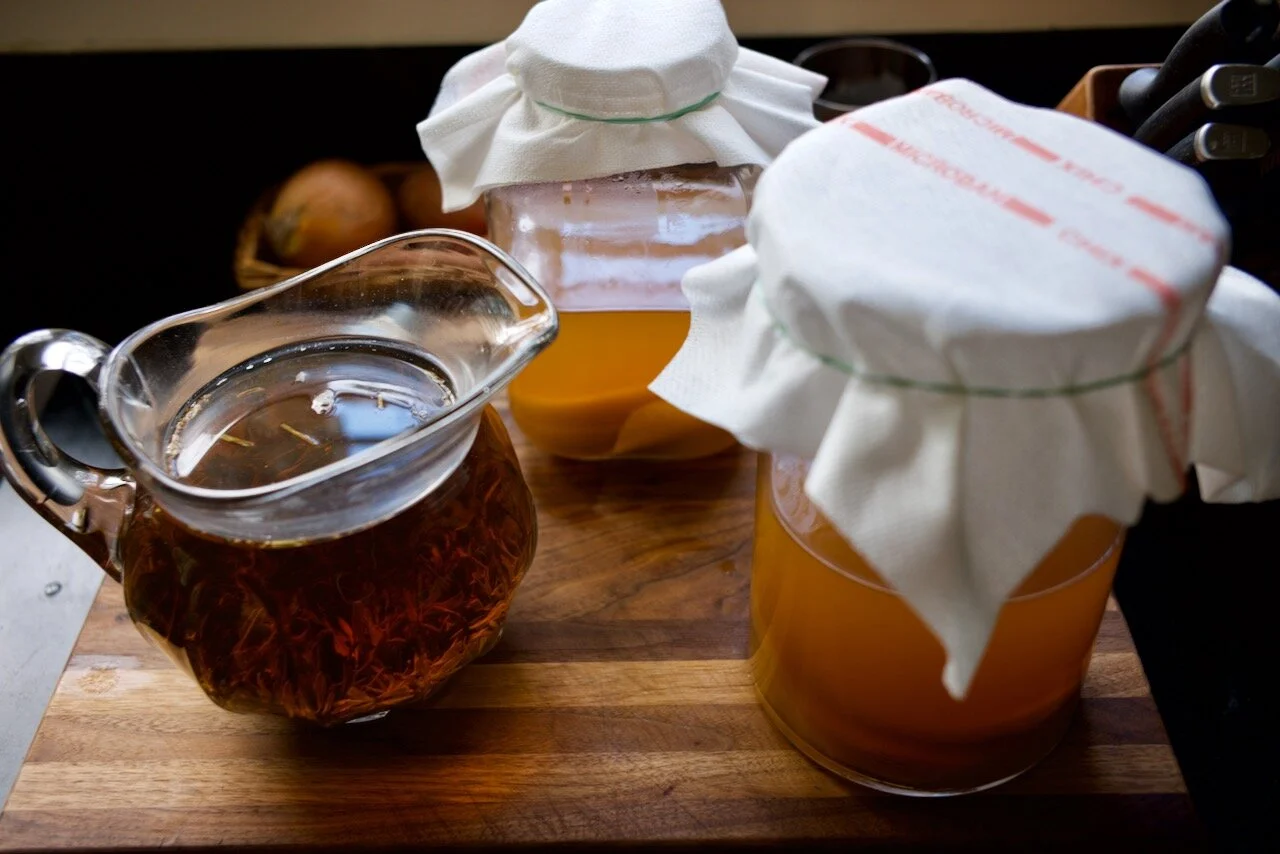
By combining the loose tea together, I am able to brew two glass pitchers full, using the tea twice to reduce waste. I have even managed to get a respectable third steep from one batch of tea. Adding sugar to the hot tea as it steeps allows the sugar, an important element in the fermentation process, to effectively combine and blend with the tea. Once cooled, you strain the tea and place it in your large glass container with the scoby in it. The key here is that you need at least a third of the previous batch of kombucha you brewed to remain so that when you combine it with the new tea, it has a starting point.
Kombucha’s ideal PH is between 2.5 and 3.5 using a PH tester or strips will help in getting the balance right. The higher the PH, say closer to 3.5, the sweeter the tea. Once you have added the new tea into the existing glass container you put the brew in a dark, room temperature place where it can sit covered with a cheesecloth or breathable fabric sealed with a string or rubber band for anywhere between 7 to 14 days.
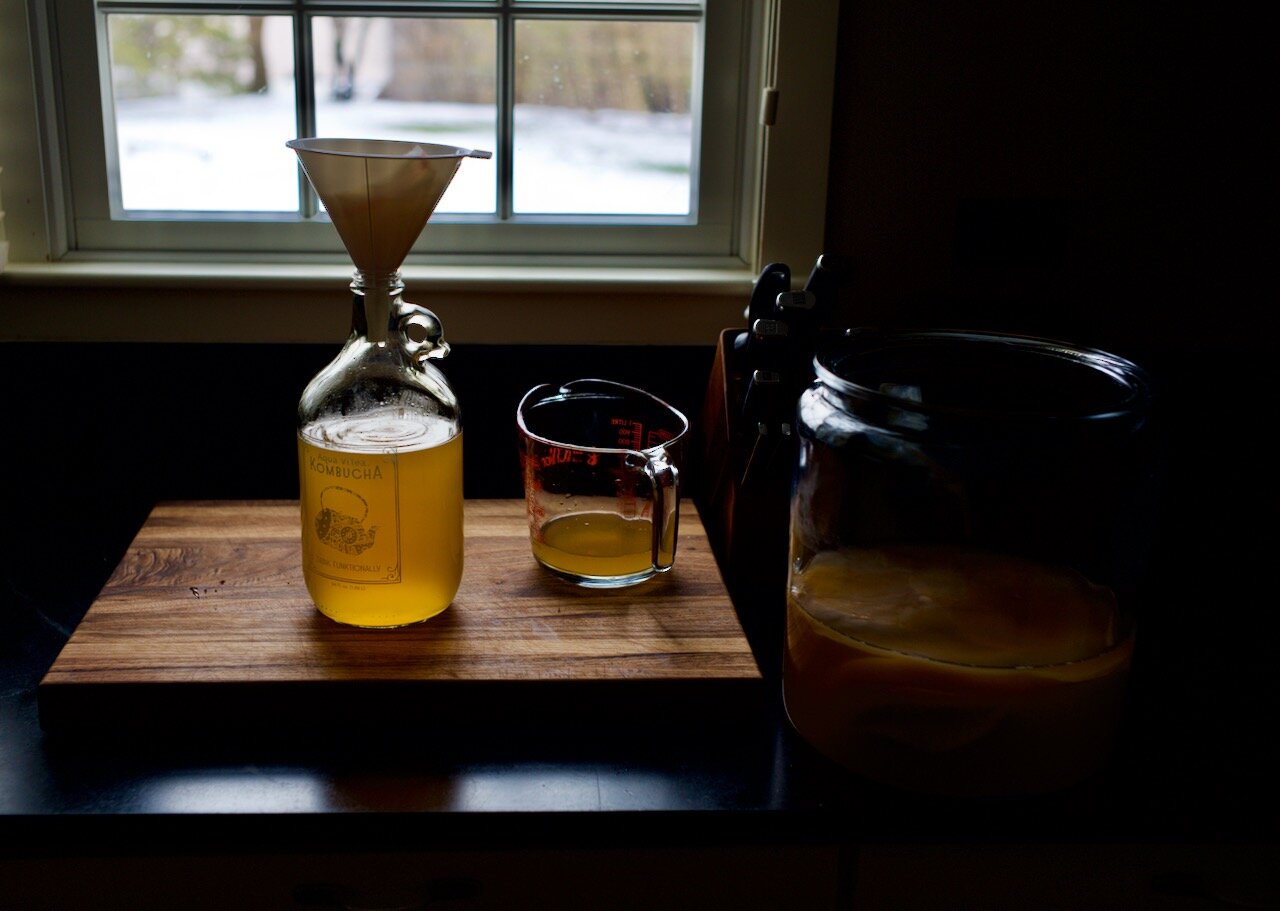
That is part one of your brewing process. Once your brew has sat undisturbed, it can then be filtered into a growler or bottle of your choice for a second fermentation. This is where the bubble comes from. My first few attempts didn’t yield the proper carbonation, but now I am able to regularly get fantastic bubbles from my second fermentation process. I have also stopped adding secondary flavors as I prefer the simple, unadulterated taste of the tea. The great thing about kombucha is that you can combine it with other flavored seltzers and beverages to come up with mock-tails and cocktails.
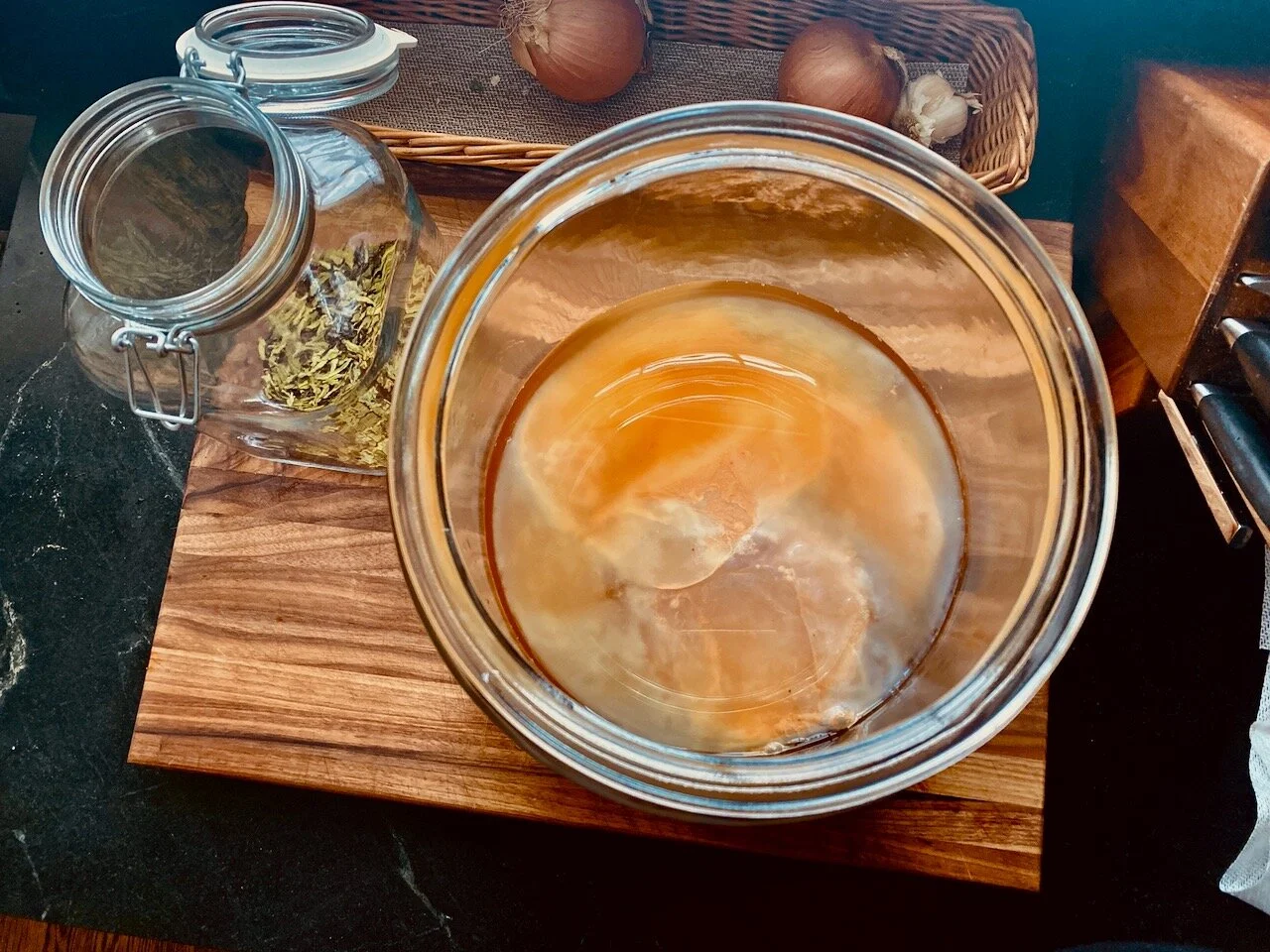
In the past two months, I have now moved my scoby into a large two gallon glass container and everything is looking healthy and in great shape. I was even able to divide a small scoby to provide to a colleague and her husband who didn’t have great luck with their first attempt at brewing.
On Saturday I now take the time to listen to good music, create a space where I can tend to my brew and enjoy the beverage I brewed a few weeks earlier throughout the upcoming week. More importantly, like many others who are home exploring new hobbies, I have found a rewarding and simple satisfaction from engaging in an activity that brings me joy. I hope you have found one too.