Convocation 2020
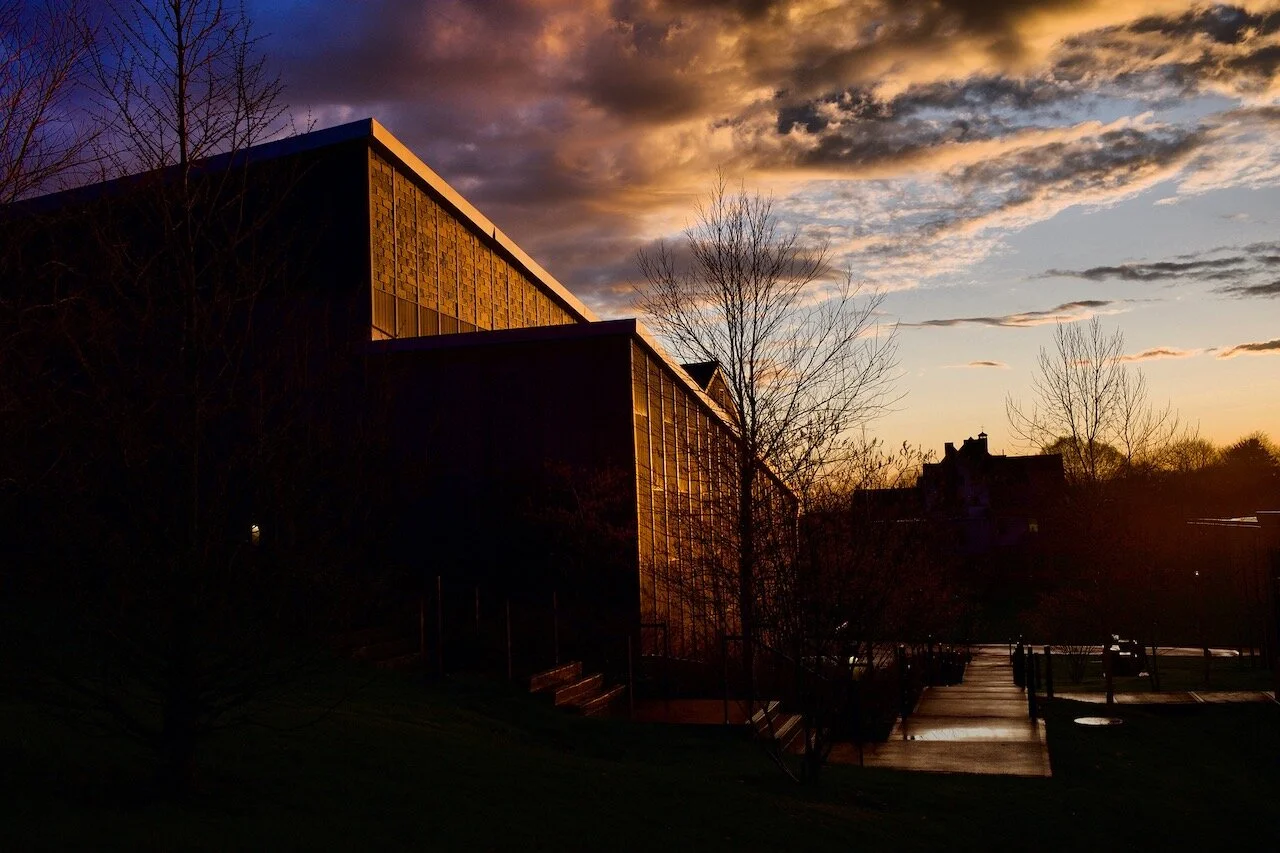
Delbridge Family Center for the Arts, Walnut Hill School for the Arts, Natick, MA
Good evening everyone.
As the 12th Head of Walnut Hill School for the Arts, it is with great joy and excitement as well a deep sense of mixed emotions that I declare the 127th year of Walnut Hill officially begun. While I am excited by the creative and artistic possibilities a new year brings, we must acknowledge the uncertainty we are feeling about the times we live in. I leave space for deep optimism about the role and contributions we can do together as artists and as a creative community.
For the first time in our history, we find ourselves gathered from across the globe and we come together in a way that no group at Walnut Hill has ever had to experience.
This year we also welcome 109 new students to our school community and combined, you are 290 of the finest young artists in the world.
You come from towns as close as Framingham, Wellesley, Concord, Needham, Natick, and Brookline and neighboring states such as New Hampshire, Connecticut, and New York. Or states a little further across the country such as Alaska, Georgia, Texas,Tennessee and Michigan. We are welcoming students from various cities across the U.S. such as Las Vegas, Clearwater, San Diego, and San Francisco. We also have students in our community who come from many corners of the world; Istanbul, Moscow, Grand Cayman, Bogotá, Waikoloa, and throughout southeast Asia.
It is precisely this richness of diversity and backgrounds that make us such a vibrant community. And because of the diversity you all bring to our community this year, we have an unbelievable opportunity to begin to change the world through creating beautiful art that inspires, challenges, and deeply affects those around us.
For the first time in our history, we must explore and rise to the challenge of building a community in a way we have never been asked to do before. Our founders greeted their students in the fall onto our sprawling campus, and it was here, on these sacred, native lands we gathered to do what humans have done for millennia. We formed a group. We built a community. We understood that in that sacred bond, when new members arrived, we used rituals and traditions long proven to forge those important new connections.
The times we are in are forcing us to make those bonds virtually and digitally. That is not to say that we cannot adapt and evolve. We have in the past, and we must again. This evolutionary process we must undergo is significant and so let us rise to this incredible opportunity. Let us use this moment to show the world that the arts and education can adapt and evolve in new and exciting ways.
The world around us has been quick to dismiss the arts as insignificant, and we have recently witnessed the sidelining of the arts. We know that many artists through the ages have been dismissed as frivolous and impractical at best, fractious and strange at worst.
We have also seen schools and education systems fail to adapt, modify and update the way they engage young artists like yourselves, and so too, we are witnessing a transformation that I believe will forever alter the landscape of teaching and learning.
I am reminded of the late, great Nina Simone, who is without question one of my favorite recording artists of all time. Hailed as the High Priestess of Soul, she started to play the piano at the age of three, she took classical music lessons and played in her mother’s church. She loved the classical piano composers: Bach, Chopin, Beethoven, and Schubert. By the time she graduated as valedictorian of her high school class and started studying at the Juilliard School in New York, her goal was to become the world’s first African American classical pianist.
She applied and was rejected from Curtis Institute of Music, something she blamed on racial discrimination.
Out of pure necessity, she began playing piano in a nightclub in Atlantic City. It was there she discovered her voice and changed her name from Eunice Kathleen Waymon to Nina Simone. She did this so her family wouldn’t find out where she was playing and that she was playing the “Devil’s Music”. She was forced to sing to her own accompaniment and it was from that moment that she went on to become one of the most influential musicians of her time. Between 1958 and 1974 she recorded over 40 albums. Several of which I am fortunate to own on vinyl.
By the early 1960s, Ms. Simone became active in the Civil Rights Movement, taking part in the Selma to Montgomery marches and recording several songs that soon became civil rights anthems. Her original song, “Mississippi Goddam,” was banned from radio play throughout the South for its frank discussion of racism. She also covered Billie Holiday's “Strange Fruit” and wrote the gospel-influenced “To Be Young, Gifted and Black,” in memory of her late friend, the playwright Lorraine Hansberry.
Ms. Simone said, “An artist’s duty, as far as I’m concerned, is to reflect the times. I think that is true of painters, sculptors, poets, musicians. As far as I’m concerned, it’s their choice, but I CHOOSE to reflect the times and situations in which I find myself. That, to me, is my duty. And at this crucial time in our lives, when everything is so desperate, when every day is a matter of survival, I don’t think you can help but be involved. Young people know this. That’s why they’re so involved in politics. We will shape and mold this country or it will cease to be molded and shaped at all. So I don’t think you have a choice. How can you be an artist and NOT reflect the times? That to me is the definition of an artist.”
That quote struck me since it is so appropriate for us, at this moment in time. She adapted out of pure necessity. She changed the way she approached her art because she had no choice, and created music of the times for the times. Her work as a civil rights activist was a direct response to the world in which she lived.
In this time, what school has been, and what school and education are becoming, is in the midst of massive transformation. The power of technology such as virtual and augmented reality, the ability to connect and share original ideas and content and broadcast it across the planet, and the evolution of traditional departments and disciplines, are emerging as powerful new tools for educators to teach a new generation of students and artists.
And so we, too, must use these tools to reflect our times, both as a school and educational institution, as well as a community provider of the arts. We must use our privilege to shape and mold the conversations we believe are important for society to have. We will engage in the work of addressing systemic racism, both from the perspective of being an independent school and from the lens of our mission as an arts organization. We must use this moment to reshape the educational system and landscape as well as the future world of the arts.
So this year, in these times, I charge you as artists and creative innovators to rise to the challenge of this moment. This charge comes in two parts, one as an organization made up of individuals from all backgrounds and from around the world. And there is a personal charge, one that I ask each and every individual in our community to embrace.
The charge is this, our approach to our work this year will be different and yet we remain firmly grounded in our core values: community, growth, excellence, creativity, and respect. Let us rise to the occasion of this moment and let history and the art we make and share tell the story of how we reflected the times we lived in.
Please join me in thanking all the members of our faculty and staff as well as our leadership students for assisting us with the opening of school; it would be impossible for us to be here this evening were it not for their collective effort. Thank you.
We are all learners, we are teachers, we are artists. These interconnected parts form the foundational and universal design of what we believe it means to educate human beings in this new world. This is human beings evolving and adapting to reflect our times. I am thankful and grateful that each and every one of you has agreed to be a part of this journey with us.
Make this moment count. I look forward to a revolutionary year!